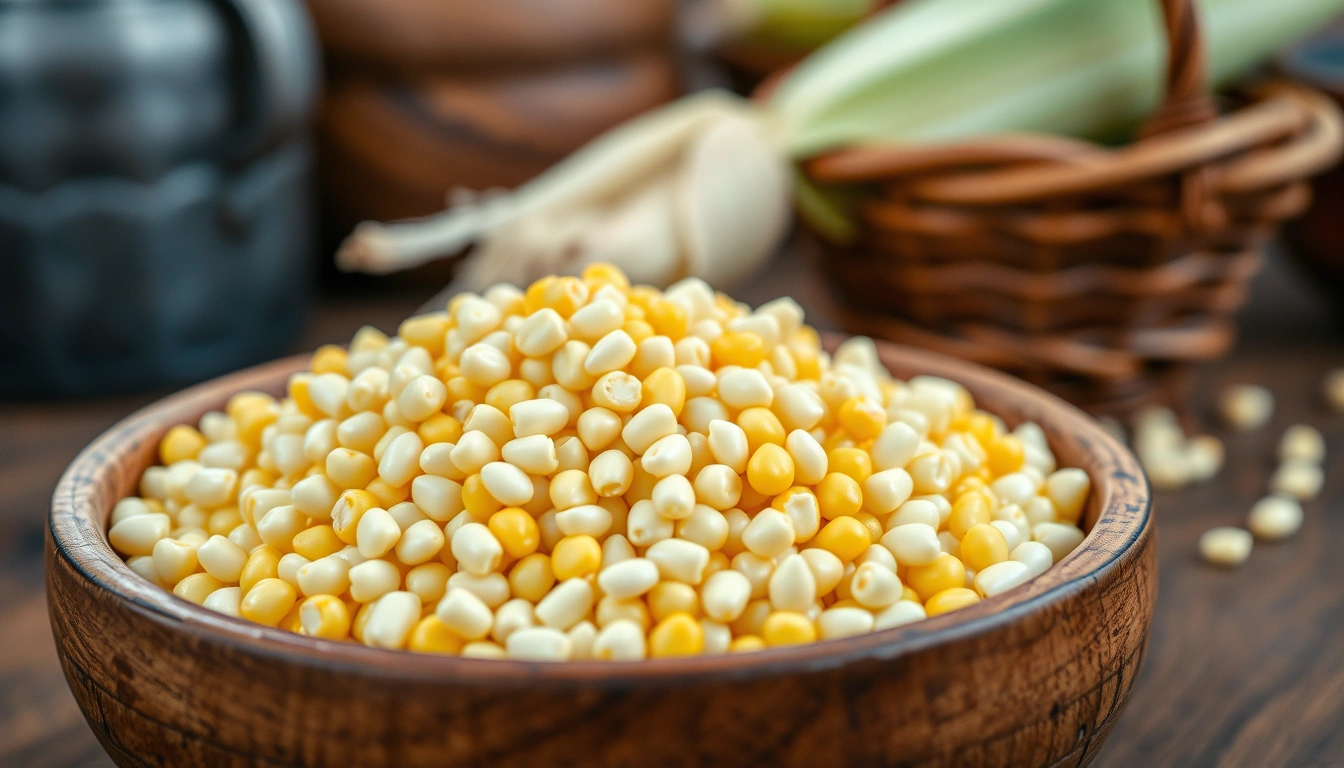
White and yellow corn
365 kcal per 100 g
Category: Cereals and Grains
Nutritional information (per 100 g)
| Calories | 365 kcal |
| Protein | 9.4g |
| Carbohydrates | 74g |
| Total fats | 4.7g |
| Fiber | 2.7g |
Vitamins and minerals
Description
White and yellow corn is a fundamental ingredient in Latin American cuisine, known for its versatility and sweet, mild flavor. Corn is a cereal native to Mesoamerica, cultivated for over 7,000 years, and is one of the pillars of the diet of various indigenous cultures.
White corn is characterized by its light-colored kernel and slightly softer texture, making it ideal for preparing dishes like tortillas, tamales, and atoles. On the other hand, yellow corn contains more carotenoids, which give it a more intense color and a slightly sweeter flavor; it is used in recipes such as arepas, pozole, or polenta.
Both types of corn are rich in complex carbohydrates, dietary fiber, B vitamins (especially niacin), and minerals like magnesium and phosphorus. Furthermore, corn provides natural antioxidants and is a good source of energy for the body.
Regarding its synonyms in Hispanic America, white and yellow corn can also be found under names such as choclo (in countries like Peru and Bolivia, although it generally refers to tender corn), blanco, grano de maíz, or simply maíz criollo. In Mexico and Central America, the term maíz is primarily used.