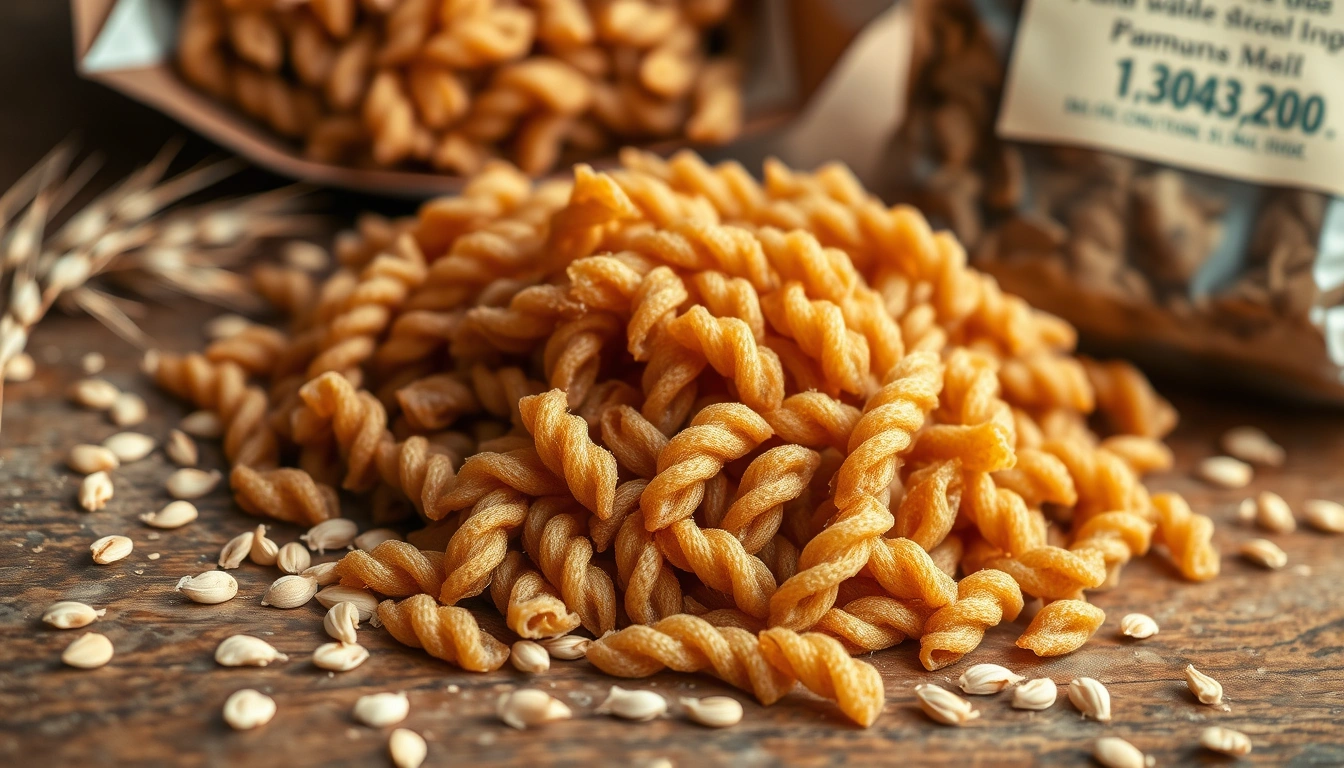
Whole wheat pasta
124 kcal per 100 g
Category: Cereals and Grains
Nutritional information (per 100 g)
| Calories | 124 kcal |
| Protein | 5g |
| Carbohydrates | 25g |
| Sugars | 1g |
| Total fats | 1.5g |
| Fiber | 6.3g |
Vitamins and minerals
Description
Whole wheat pasta is a type of pasta made from whole wheat flour, which includes the bran and germ of the grain, unlike traditional refined pasta. This gives it a darker color and a denser, more fibrous texture. It is highly valued in cooking for its nutritional contribution and its more intense and characteristic flavor.
Origin: Whole wheat pasta has its roots in the Italian tradition of pasta making, adapting over time to offer a healthier option. It is currently produced in various regions of the world, maintaining the basic manufacturing method but using whole wheat flour to preserve all the nutrients of the grain.
Properties: Whole wheat pasta is rich in dietary fiber, which promotes intestinal transit and provides a feeling of satiety, making it ideal for balanced diets. Furthermore, it contains higher amounts of B-complex vitamins, minerals such as iron and magnesium, and antioxidants compared to refined pasta. Its glycemic index is lower, which helps maintain more stable energy levels.
Synonyms in the Hispanic world: Although "pasta integral" is the most common name, in some regions it is also known as fideos integrales or tallarines integrales, depending on the type of pasta. In certain countries, the term espaguetis integrales is frequent when referring to this specific format.