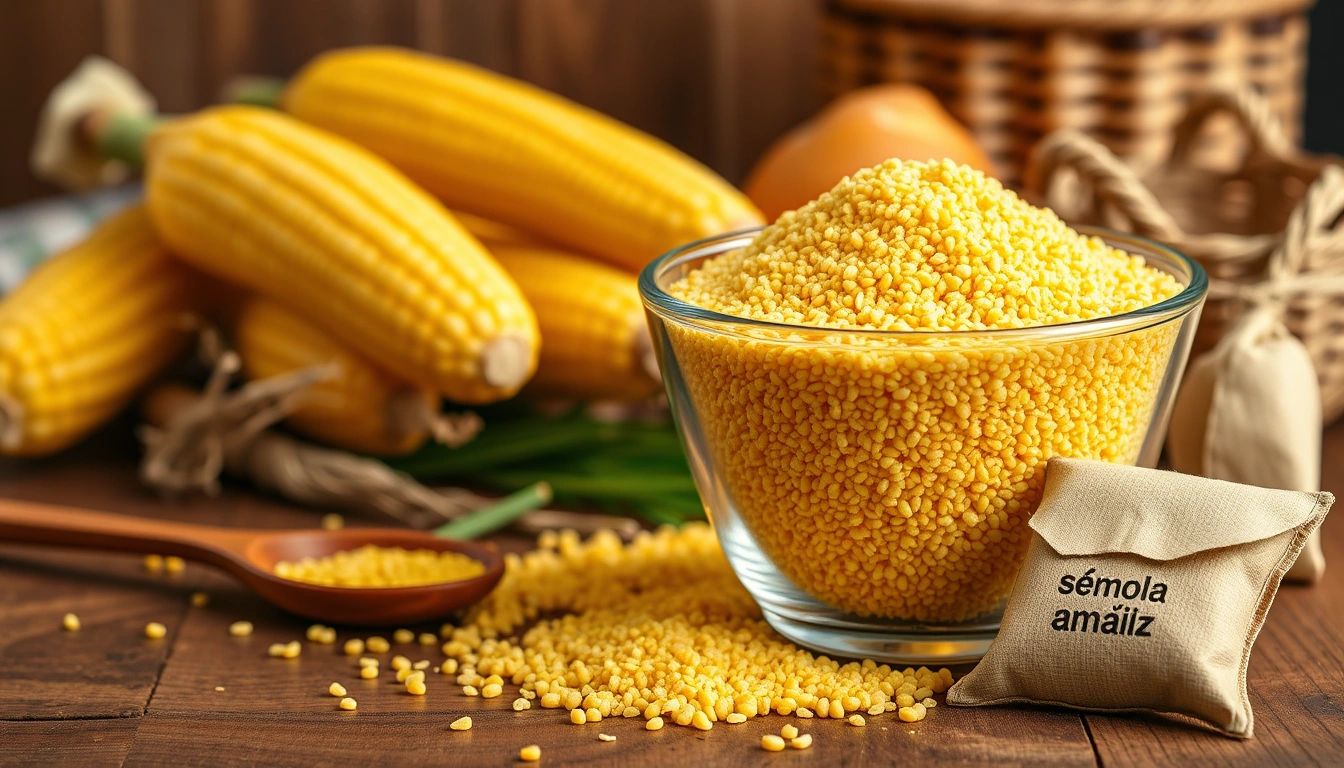
Yellow corn semolina
370 kcal per 100 g
Category: Cereals and Grains
Nutritional information (per 100 g)
| Calories | 370 kcal |
| Protein | 9g |
| Carbohydrates | 77g |
| Total fats | 1.5g |
| Fiber | 7g |
Vitamins and minerals
Description
Yellow corn semolina is a staple ingredient in many Latin American and Mediterranean cuisines. It is a coarse powder or granule obtained from grinding yellow corn, which retains the characteristic texture and flavor of this cereal.
Its origin is directly linked to the agricultural traditions of the Americas, where corn is an ancestral and fundamental crop in the diet. Yellow corn semolina is especially popular in countries like Mexico, Colombia, Venezuela, and Caribbean nations, where it is used to prepare traditional dishes such as arepas, polenta, hallacas, tortillas, and various types of stews.
This ingredient is valued not only for its mild and slightly sweet flavor but also for its nutritional properties. It is a good source of complex carbohydrates that provide sustained energy, and it also contains dietary fiber, B vitamins, and minerals such as iron and magnesium. It is also naturally gluten-free, making it an excellent option for people with intolerance or sensitivity to this component.
In terms of synonyms or alternative names in the Spanish-speaking world, yellow corn semolina may be found under terms such as coarse corn flour, polenta corn flour, polentina, or simply polenta when referring to the specific preparation. In some countries, it is also referred to as coarse ground corn or pounded corn, although these terms may vary slightly depending on the region and the coarseness of the grind.
In cooking, yellow corn semolina is very versatile: it can be cooked in soups, used as a base for breads and tortillas, or prepared into creamy and comforting dishes. Its granular texture adds body and consistency to recipes, making it an essential ingredient for those seeking authentic and traditional flavors.