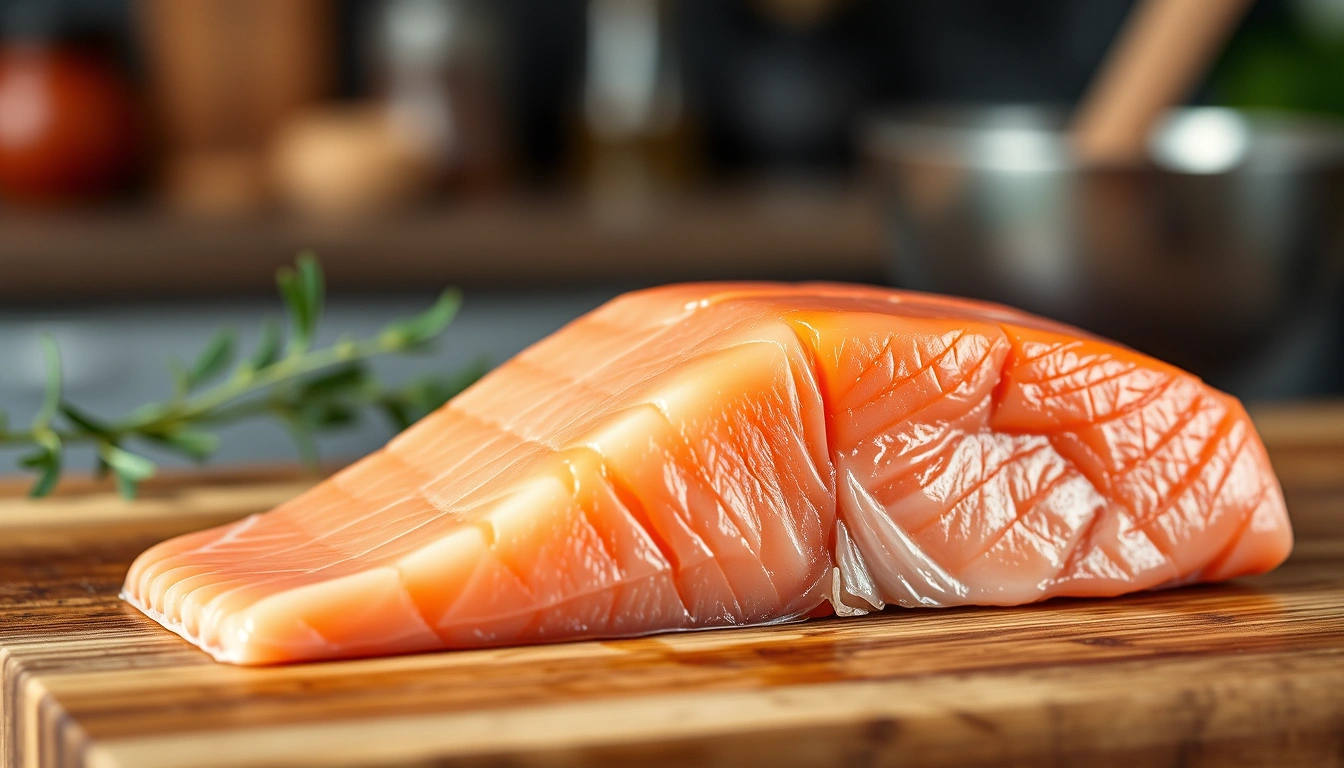
Salmon fillet without skin or bones
206 kcal per 100 g
Category: Fish and Seafood
Nutritional information (per 100 g)
| Calories | 206 kcal |
| Protein | 20g |
| Carbohydrates | 0g |
| Sugars | 0g |
| Total fats | 13g |
| Saturated fats | 3g |
| Fiber | 0g |
| Cholesterol | 55mg |
Vitamins and minerals
Description
Skinless and boneless salmon fillet is a clean and ready-to-cook cut of salmon fish, known for its delicate flavor and soft texture. This ingredient is highly valued in cooking for its versatility and nutritional value, and is used in a wide variety of dishes, from grilled preparations to baked or pan-fried dishes.
Origin: Salmon is a fish native to the cold waters of the northern hemisphere, especially the North Atlantic and the North Pacific coasts. Currently, the fillet found in the market can come from both wild catch and aquaculture, with the latter being very common to ensure year-round availability.
Properties: Salmon fillet is an excellent source of high-quality protein, omega-3 fatty acids, which contribute to cardiovascular health, and B-complex vitamins, especially B12 and niacin. It also contains essential minerals like selenium and phosphorus. Being skinless and boneless, it is a practical option that facilitates its consumption and preparation in the kitchen.
Synonyms in Latin American Spanish: In various Latin American countries, this ingredient may also be called piece of salmon without skin, boneless salmon loin, or simply salmon fillet. In some places, the term salmon fish is used to refer to salmon in general.