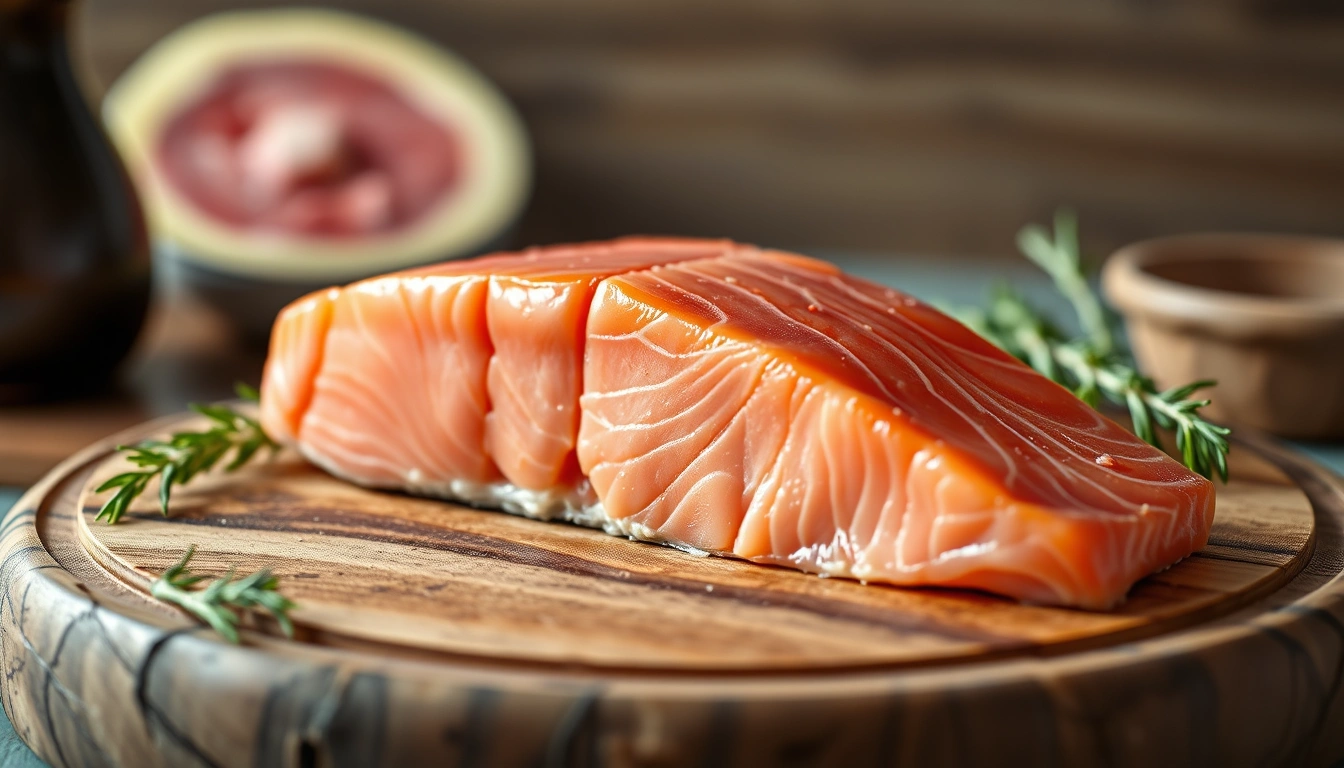
Salmon fillet without skin or bones.
206 kcal per 100 g
Category: Fish and Seafood
Nutritional information (per 100 g)
| Calories | 206 kcal |
| Protein | 20g |
| Carbohydrates | 0g |
| Sugars | 0g |
| Total fats | 13g |
| Saturated fats | 3g |
| Fiber | 0g |
| Sodium | 50mg |
| Cholesterol | 55mg |
Vitamins and minerals
Description
Skinless and boneless salmon fillet is a clean and practical cut of salmon, consisting of the pink and juicy fish meat, without the outer skin or bones. This type of fillet is ideal for various culinary preparations that seek a soft texture and a delicate flavor, suitable for grilling, baking, broiling, or steaming.
Salmon is a cold-water fish native primarily to regions of the northern hemisphere, such as the North Pacific and North Atlantic, with countries like Norway, Canada, Chile, and the United States being major producers. Its farming and fishing have increased worldwide due to its popularity and versatility in the kitchen.
This ingredient is especially valued for its nutritional properties: it is an excellent source of high-quality protein, omega-3 fatty acids, which are beneficial for cardiovascular health, in addition to containing B vitamins, vitamin D, and minerals such as selenium and potassium.
In different Spanish-speaking countries, the salmon fillet may have similar names, although they vary slightly:
- Filete de salmón (standard name in most countries).
- Lomo de salmón (used in some places to denote a thicker, skinless cut).
- Tronco de salmón (terminology used in some South American countries for large cuts without skin or bones).
In cooking, the skinless and boneless salmon fillet facilitates quick preparation and elegant presentation, being the star of both healthy and gourmet recipes.