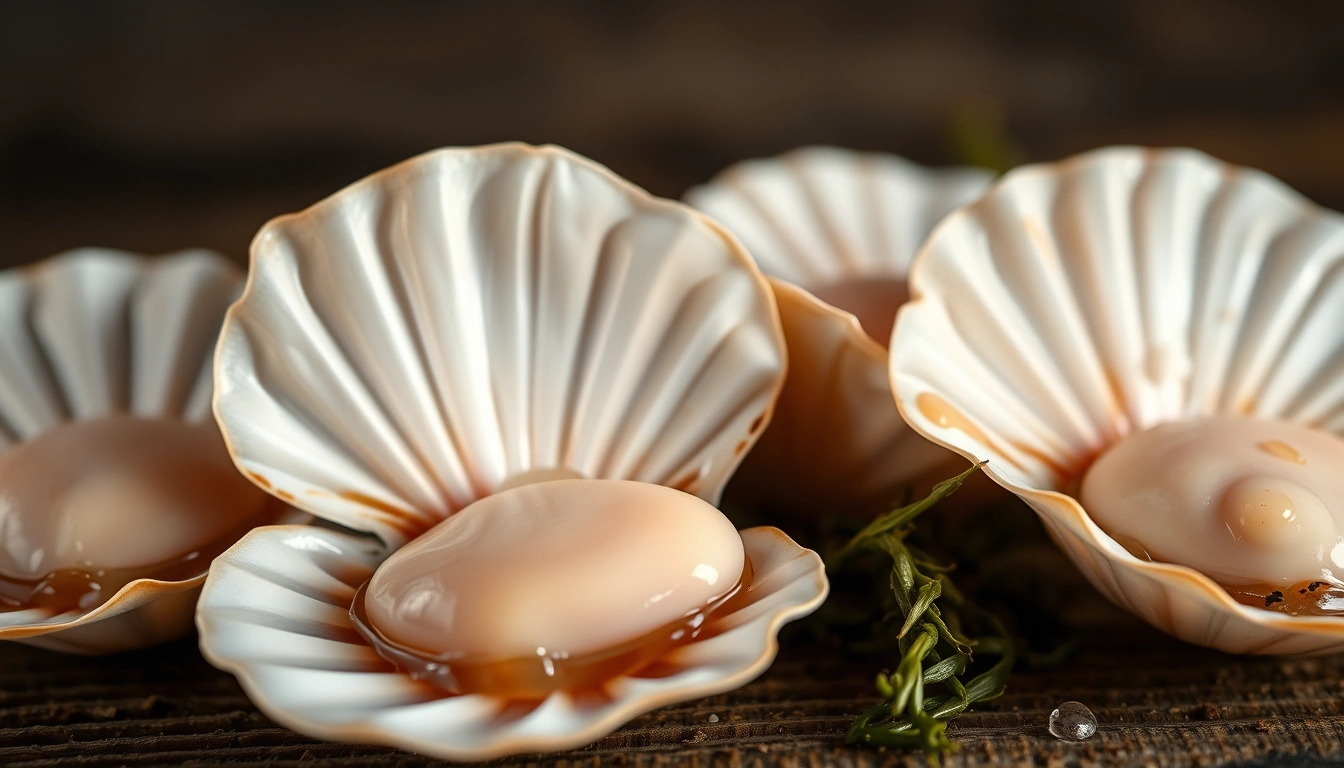
Scallops
69 kcal per 100 g
Category: Fish and Seafood
Nutritional information (per 100 g)
| Calories | 69 kcal |
| Protein | 12g |
| Carbohydrates | 3.2g |
| Total fats | 0.8g |
| Fiber | 0g |
| Sodium | 286mg |
Vitamins and minerals
Description
Scallops are marine bivalve mollusks highly valued in gastronomy for their delicate flavor and soft texture. Their main body, known as the "scallop shell," is rounded and flattened with a characteristic scalloped edge, although in cooking, the primarily used edible part is called the adductor muscle, which is what is consumed and cooked in various ways, from grilled to more elaborate preparations.
They originate from the temperate and cold coasts of the northern hemisphere and Latin America, especially in the Atlantic Ocean, although similar species can be found in other regions of the world. In Latin American cuisine, scallops are a sophisticated ingredient that often appears in seafood dishes and haute cuisine.
Properties: scallops are an excellent source of high biological value proteins, low in fat and calories, making them a nutritious and light food. They also provide minerals such as zinc, selenium, and magnesium, as well as B vitamins, which aid in the proper functioning of the body and have antioxidant properties.
In different Spanish-speaking countries, scallops have various synonyms: in Mexico and Central America, they may be known as vieira or simply “seafood,” although the term is usually the same. In some parts of South America, “concha de peregrino” or “concha blanca” are also used to refer to this species.
In summary, scallops are a key ingredient for recipes seeking a delicate marine flavor and creamy texture, ideal for preparations such as ceviches, stews, pastas, and as the star in gourmet dishes.