Seafood
99 kcal per 100 g
Category: Fish and Seafood
Nutritional information (per 100 g)
| Calories | 99 kcal |
| Protein | 20.6g |
| Carbohydrates | 0g |
| Total fats | 1.5g |
| Saturated fats | 0.3g |
| Fiber | 0g |
| Sodium | 148mg |
| Cholesterol | 65mg |
Vitamins and minerals
Description
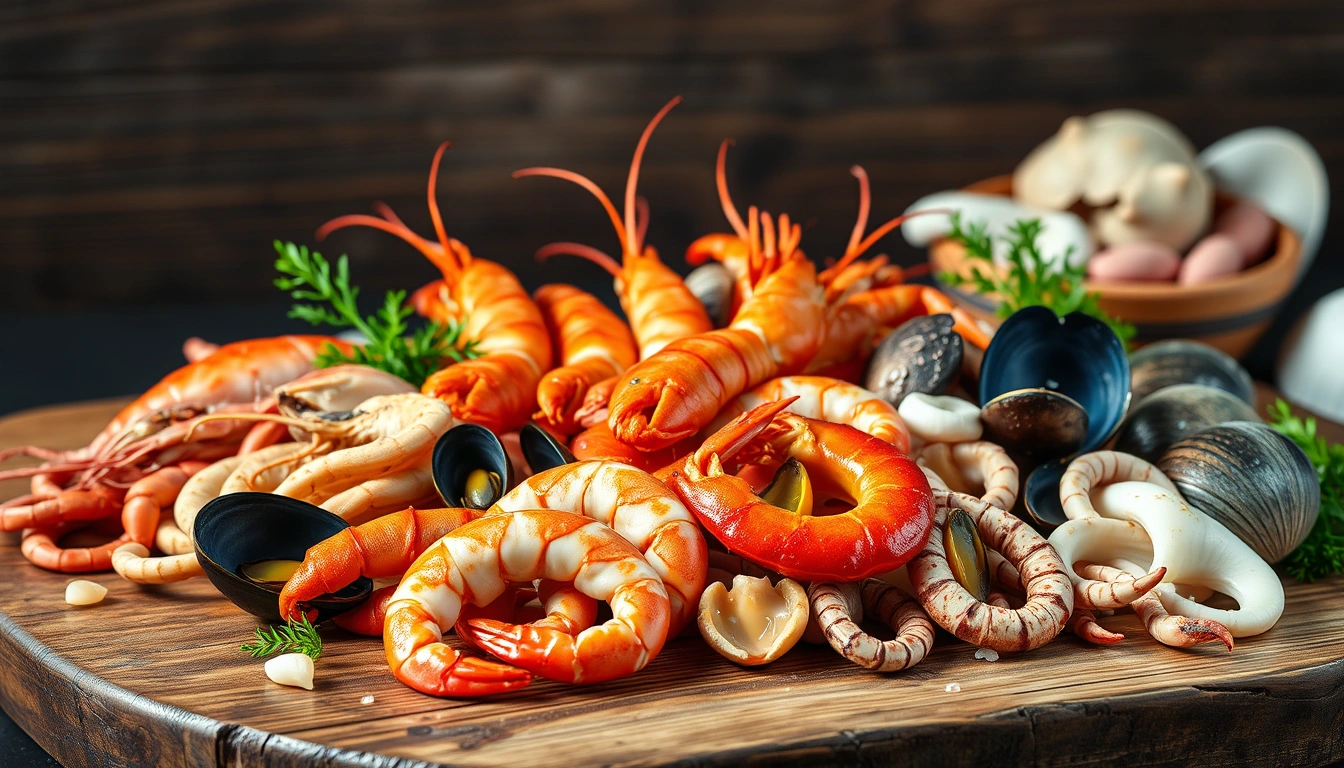
Seafood is a term that groups together various edible marine animals, mainly those that are not fish, such as crustaceans (shrimp, lobsters, crabs), mollusks (clams, mussels, octopus, squid), and other marine invertebrates. They are very popular ingredients in the cuisine of many cultures, known for their fresh flavor and unique texture, ideal for preparing everything from soups and stews to grilled or steamed dishes.
Origin: Seafood is primarily obtained from marine environments, being caught in oceans and seas around the world. Its consumption has a long tradition in coastal regions, especially in countries with access to the sea such as Spain, Mexico, Argentina, Chile, Peru, and many Caribbean countries.
Properties: Seafood is an excellent source of high-quality protein, low in saturated fat and rich in omega-3 fatty acids, which are beneficial for cardiovascular health. They also provide essential minerals such as iodine, zinc, iron, and calcium, as well as B vitamins. They are nutritious ingredients that contribute to a balanced diet.
Synonyms in Latin America: Depending on the region, seafood can also be called frutos del mar (fruits of the sea), mariscos y pescados (when included with fish), or simply mariscos. In some places, the word may be more associated with crustaceans and mollusks in general, while in others it is used to refer exclusively to mollusks.