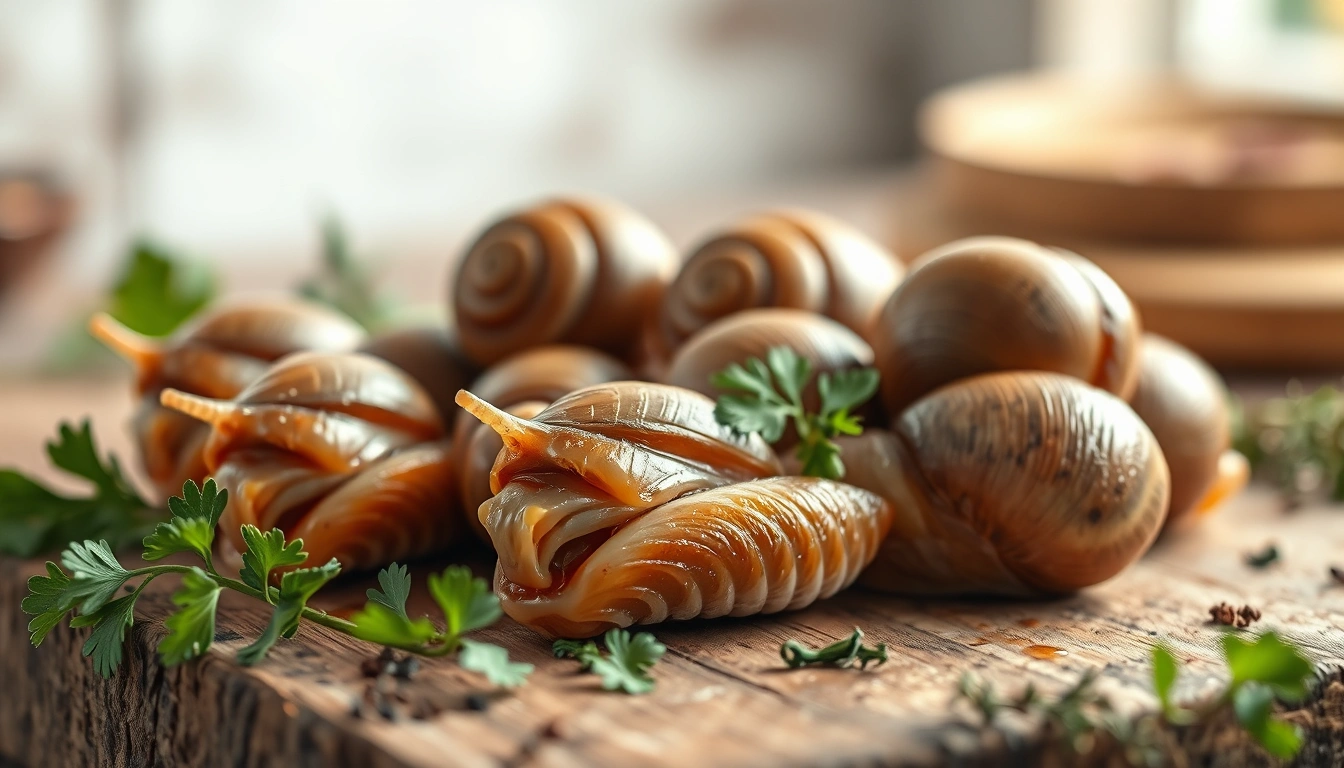
Snail
90 kcal per 100 g
Category: Fish and Seafood
Nutritional information (per 100 g)
| Calories | 90 kcal |
| Protein | 16g |
| Carbohydrates | 2g |
| Total fats | 1.4g |
| Fiber | 0.0g |
Vitamins and minerals
Description
Snail is a traditional ingredient in various cuisines around the world, particularly popular in Latin American and Mediterranean countries. It refers to the meat extracted from terrestrial or aquatic gastropod mollusks, commonly known as snails. Its texture is soft and slightly chewy, with a delicate flavor that is often enhanced with spices and herbs in stews, soups, or sautés.
The consumption of snails has a very ancient origin, with records in Mediterranean gastronomy, especially in France, Spain, and Italy, as well as in indigenous cultures of Latin America, where both land snails and freshwater snails are utilized.
Regarding its nutritional properties, snail is an excellent source of lean protein, low in fat and rich in minerals such as iron, magnesium, and calcium. Furthermore, it provides essential fatty acids and is low in calories, making it a healthy and nutritious food.
In the Hispanic American context, this ingredient may have different names depending on the region. Among the most common synonyms are land snail, river snail, and, in some countries, more specific terms such as búfalo (in certain areas of Venezuela) or simply snail. In Mexico, for example, it is also known as escargot when referring to the French-style preparation.
Snail is ideal for recipes such as caracolada (snail feast), stews, ceviches, and soups, providing a unique and traditional flavor that enriches the culinary experience.