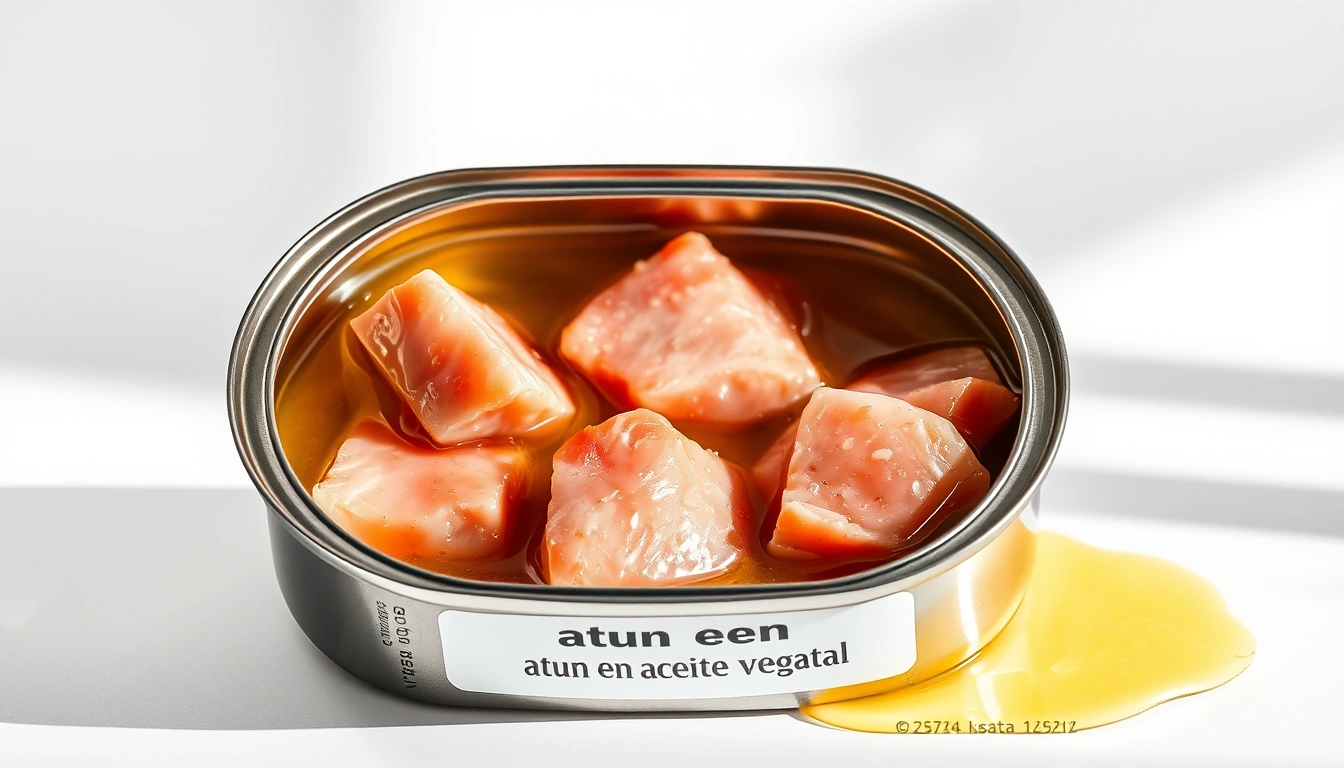
Tuna in vegetable oil
198 kcal per 100 g
Category: Fish and Seafood
Nutritional information (per 100 g)
| Calories | 198 kcal |
| Protein | 25g |
| Carbohydrates | 0g |
| Total fats | 11g |
| Saturated fats | 2.5g |
| Fiber | 0g |
| Sodium | 300mg |
Vitamins and minerals
Description
Tuna in vegetable oil is a very popular ingredient in cooking due to its versatility and intense flavor. It consists of fillets or loins of tuna, generally from high-quality species like light tuna or yellowfin tuna, preserved in a neutral vegetable oil (such as sunflower, soybean, or canola oil) that helps maintain its juicy texture and enhances its flavor.
This product originates from the canned preservation technique, which emerged to extend the shelf life of fresh fish and facilitate its transport and use in multiple recipes. Traditionally, tuna in oil was popularized in Mediterranean countries and from there it spread worldwide, now being essential in salads, pastas, stews, and sandwiches.
Among its properties, tuna in vegetable oil is a good source of high-quality protein and omega-3 fatty acids, although the fat content varies depending on the type and amount of oil added. It is low in carbohydrates and rich in minerals such as magnesium, potassium, and selenium, contributing to a balanced and nutritious diet.
In different Latin American countries, tuna in vegetable oil may also be known simply as tuna in oil, tuna in edible oil, or in some contexts it is called tuna in sunflower oil if the type of oil is specified. Furthermore, it is commonly found alongside tuna in water, so this name helps differentiate the product based on the desired preservation and flavor for the recipe.