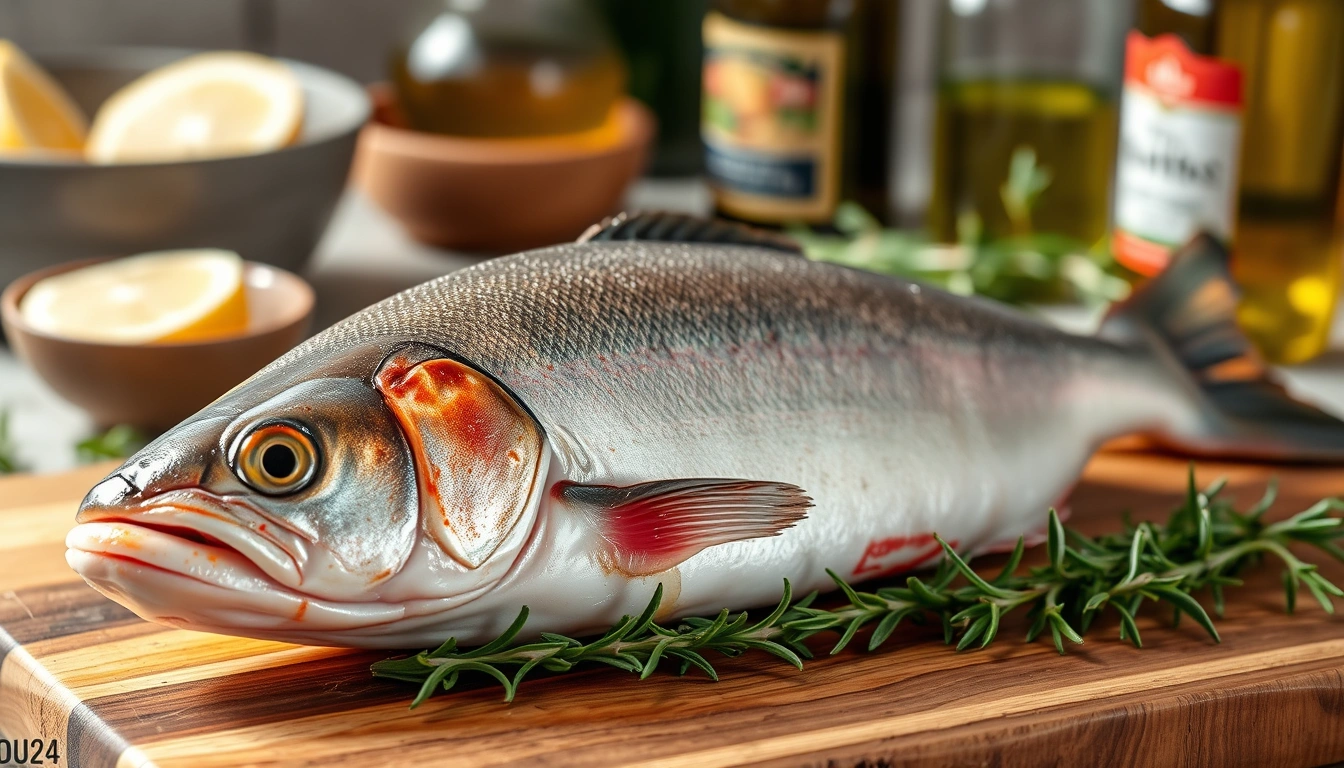
Whole trout
148 kcal per 100 g
Category: Fish and Seafood
Nutritional information (per 100 g)
| Calories | 148 kcal |
| Protein | 20.5g |
| Carbohydrates | 0g |
| Sugars | 0g |
| Total fats | 6.6g |
| Saturated fats | 1.2g |
| Fiber | 0g |
| Sodium | 50mg |
| Cholesterol | 60mg |
Vitamins and minerals
Description
Whole trout is a freshwater fish highly valued in gastronomy for its delicate flavor and soft texture. It is a medium-sized fish commonly featured on menus and in recipes in its complete form, with head, bones, and skin, which allows for maximizing its juiciness and nutrients during cooking.
Its natural origin is in clear, cool rivers and lakes, primarily in temperate regions of Europe, North America, and South America. Trout is also farmed in fish farms to ensure its year-round availability.
From a nutritional standpoint, whole trout is an excellent source of high-quality protein, omega-3 fatty acids, B-complex vitamins (especially B12), and minerals such as phosphorus and selenium. Its regular consumption contributes to a balanced and healthy diet.
In various Spanish-speaking countries, trout goes by different names that can vary by region and the type of trout, such as common trout, rainbow trout, or simply trout. However, when referring to whole trout, it always means the complete fish, ideal for preparing baked, grilled, or steamed recipes, preserving all its natural flavors.