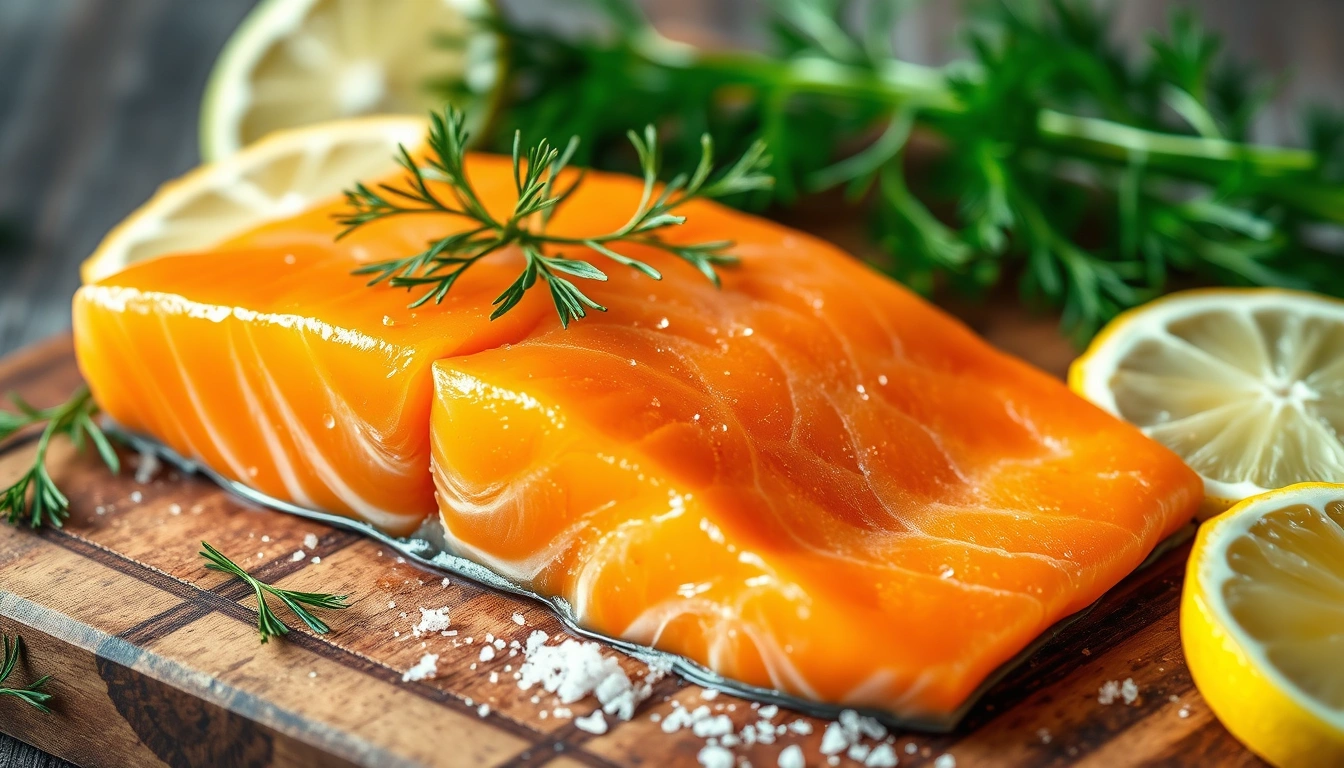
Wild salmon
142 kcal per 100 g
Category: Fish and Seafood
Nutritional information (per 100 g)
| Calories | 142 kcal |
| Protein | 20g |
| Total fats | 6g |
| Saturated fats | 1g |
| Fiber | 0g |
| Cholesterol | 55mg |
Vitamins and minerals
Description
Wild salmon is a type of fish that comes from species that naturally inhabit rivers, oceans, and seas, without human intervention in their rearing. Unlike farmed salmon, wild salmon grows in its natural environment, which gives it a more intense flavor and a firm texture.
Origin: This salmon is typically found in cold regions of the northern hemisphere, such as the North Pacific coasts (Alaska, Canada, Russia) and the North Atlantic (Norway, Scotland). It is prized worldwide for its quality and characteristic flavor.
Properties: Wild salmon is an excellent source of high-quality protein, omega-3 fatty acids, B vitamins, and essential minerals like selenium and potassium. Its consumption is associated with benefits for cardiovascular health, brain function, and the reduction of inflammation.
Synonyms in Spanish from Latin America: In different Latin American countries, wild salmon may simply be known as salmón (salmon) or, at times, it is distinguished from its farmed version by calling it salmón silvestre (wild salmon) or salmón natural (natural salmon). In general, the term salmón salvaje (wild salmon) is widely understood and used to differentiate it from farmed salmon.